


 Facebook
 Instagram
 Twitter
 Linkedin
Contact Us
Factory-256, Sector E, Sanwer Road Industrial Area,
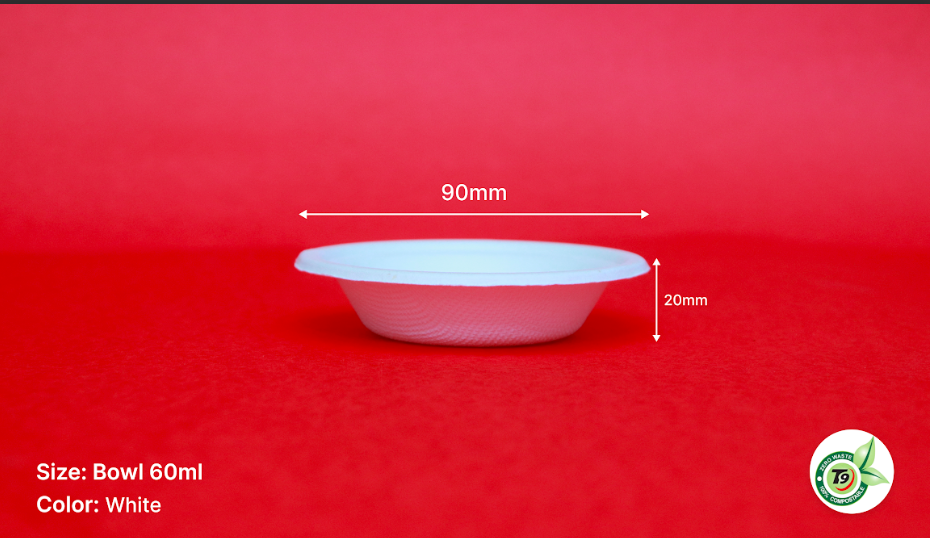
In stock
The manufacturing process of biodegradable sugarcane bowls begins with harvesting sugarcane, typically after it's used for sugar production. The leftover fibrous material, known as bagasse, is collected and undergoes a series of steps to transform it into a moldable material suitable for bowl production.
First, the collected bagasse is cleaned to remove any impurities like dirt and debris. Then, it undergoes a pulping process where it's broken down into smaller fibers. This pulping process can involve mechanical or chemical methods, or a combination of both. Mechanical pulping uses machinery to grind and shred the bagasse fibers, while chemical pulping involves treating the fibers with chemicals to separate the lignin and other components.
Once the bagasse fibers are pulped, they are mixed with water to create a slurry-like consistency. Additives such as starch or other natural binders may be included to enhance the material's properties. This mixture is then poured into molds shaped like bowls. These molds can vary in size and shape depending on the desired final product.
After filling the molds, the mixture undergoes a pressing process to remove excess water and compact the fibers together. Heat may be applied during this step to help dry and solidify the material. Once the bowls have been formed and sufficiently dried, they are removed from the molds and trimmed to ensure uniform shape and size.
The finished bowls may undergo additional processes such as smoothing or polishing to improve their appearance and feel. They are then packaged and distributed for use in various applications such as food service or retail.
The entire manufacturing process of sugarcane bowls is designed to be environmentally friendly and sustainable. By utilizing bagasse, a byproduct of sugarcane production that would otherwise be discarded or burned, the process reduces waste and minimizes environmental impact. Additionally, sugarcane bowls are biodegradable and compostable, offering a renewable alternative to traditional plastic or paper products.
Factory-256, Sector E, Sanwer Road Industrial Area,


 Select Date Select time


 Website
 Youtube