


 Facebook
 Instagram
 Twitter
 Linkedin
Contact Us
Factory-256, Sector E, Sanwer Road Industrial Area,
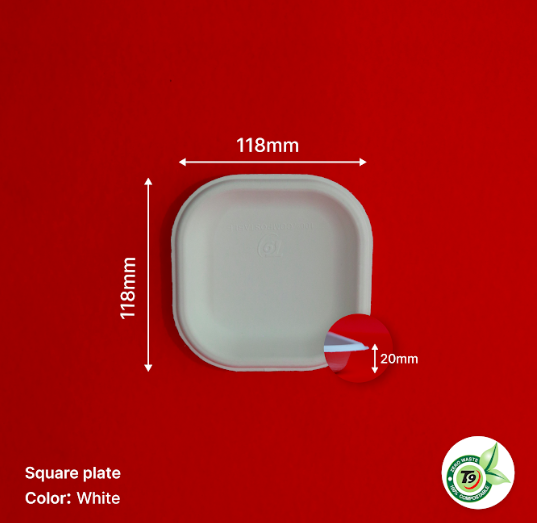
In stock
The manufacturing process of square biodegradable plates prioritizes eco-consciousness and sustainability. It typically begins with sourcing renewable plant-based materials such as bamboo, sugarcane bagasse, or cornstarch. These materials are chosen for their biodegradability and minimal environmental impact.
Once the raw materials are collected, they undergo a series of steps to transform them into sturdy and functional plates. Initially, the plant fibers are pulverized into a fine pulp through mechanical or chemical processes. This pulp is then mixed with water to form a slurry.
Next, the slurry is poured into molds shaped like square plates. These molds are designed to the desired dimensions and specifications of the final product. Pressure and heat may be applied to the molds to help compact the pulp and remove excess moisture, facilitating the formation of a solid structure.
After molding, the plates are dried to remove any remaining moisture content. This can be achieved through air-drying or by using specialized drying equipment. Once dry, the plates undergo quality control checks to ensure they meet the necessary standards for strength, durability, and biodegradability.
Depending on the manufacturer's preferences and capabilities, additional steps such as trimming, polishing, or printing branding information may be performed before packaging the plates for distribution.
Throughout the manufacturing process, efforts are made to minimize waste and energy consumption. Water usage is optimized, and any excess pulp or byproducts generated during production are often recycled or repurposed. Furthermore, renewable energy sources may be utilized to power machinery, reducing the carbon footprint of the manufacturing operation.
The end result is a square biodegradable plate that offers a sustainable alternative to traditional plastic or Styrofoam options. These plates are compostable, meaning they can break down naturally into organic matter when disposed of properly, without causing harm to the environment. By choosing biodegradable plates, consumers can support environmentally responsible practices and contribute to reducing plastic pollution.
Factory-256, Sector E, Sanwer Road Industrial Area,


 Select Date Select time


 Website
 Youtube