In the heart of bustling Mumbai, where the vibrant culture meets the modern hustle, lives Meera Verma, a 28-year-old marketing executive. Like many young professionals, Meera juggles the demands of her career with the desire to uphold her cultural heritage. Her days are filled with meetings, presentations, and the relentless pursuit of excellence. Yet, amid this fast-paced life, Meera faces a challenge that many Indian women might relate to—a struggle with self-confidence.
Despite her professional achievements, Meera often finds herself questioning her abilities and appearance. She yearns for something that can boost her confidence and reflect her rich heritage while fitting seamlessly into her modern lifestyle. This is where the Mayur Earrings come into play—a perfect fusion of traditional elegance and contemporary style.
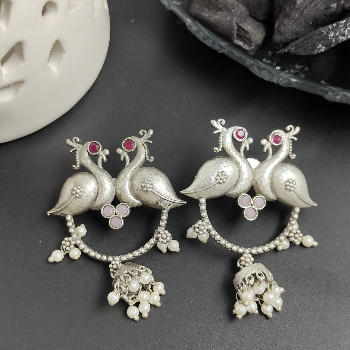
The Mayur Earrings, inspired by the majestic peacock, are more than just a piece of jewelry. They are a symbol of grace and beauty, capturing the essence of Indian tradition. Each earring is meticulously crafted, echoing the vibrant hues and intricate designs that the peacock is known for. When Meera first laid eyes on these earrings, she was instantly captivated by their allure.
Wearing the Mayur Earrings, Meera felt an immediate transformation. It was as if the colors of the peacock infused her with a newfound confidence—one that she carried into her workplace. Her colleagues noticed the change; her presentation skills improved, and her interactions became more assertive. The earrings became her talisman, a reminder of her strength and cultural roots.
The distinct problem that Meera and many like her face is the emotional journey of self-doubt, exacerbated by the pressure to blend tradition with modernity. In Indian society, jewelry is not just an accessory; it's a statement of identity and heritage. The Mayur Earrings solve this problem by serving as a bridge between past and present. They allow women to express their individuality while honoring their cultural background.
Consider the case of Priya, a young entrepreneur in Bengaluru, who also embraced the Mayur Earrings. For Priya, every business meeting was a test of nerves, and she often felt overshadowed by her male counterparts. However, the intricate design and vibrant colors of the Mayur Earrings became her secret weapon. They gave her a sense of empowerment, an inner strength that shone through in her interactions. Her business flourished as she exuded confidence and charm, making the earrings a staple in her professional wardrobe.
The story of Meera and Priya is not unique. Across India, many women are discovering the transformative power of the Mayur Earrings. These earrings are not just a fashion statement; they are an emotional anchor, a source of empowerment that helps women navigate the complexities of modern life while staying rooted in tradition.
In conclusion, the Mayur Earrings offer more than just aesthetic appeal. They address the emotional need for confidence and cultural expression. For women like Meera and Priya, these earrings are a testament to their journey—an emblem of resilience and grace. As they navigate the challenges of modernity, the Mayur Earrings stand as a symbol of empowerment, bridging the gap between tradition and contemporary style.
As Meera steps into her next meeting, she no longer questions her abilities. With the Mayur Earrings adorning her ears, she carries the spirit of the peacock—regal, confident, and undeniably beautiful. In the shimmering reflection of these earrings, she sees her true self—a modern Indian woman who embraces her heritage with pride and grace.
By weaving the narrative of Meera and Priya, this blog not only highlights the emotional and practical benefits of the Mayur Earrings but also positions them as an essential accessory for the modern Indian woman. This story-driven approach, infused with cultural insights and personal transformation, creates a compelling case for why every woman should own a pair of these exquisite earrings.
Visit Vyaparify Site: https://id.vyaparify.com/anjali-jain

 Go To Homepage