 Facebook
 Instagram
 Twitter
 Linkedin
Ayurvedic Treatment for Anal Fissure – A Clinical Experience of Pain and Burning Relief
Anal pain and burning can significantly affect a person's daily activities. In some cases, the discomfort becomes so severe that even sitting, walking or concentrating on routine work becomes difficult.
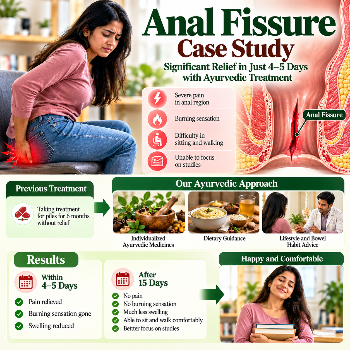
This is the clinical experience of a 27-year-old female student who visited Ayurveda Gokulam Panchakarma Kendra with severe pain, burning and swelling around the anal region.
She had previously been receiving treatment for piles for approximately six months but had not experienced satisfactory improvement.
Following clinical consultation, individualized Ayurvedic medicines and appropriate dietary and lifestyle advice were provided. At her 15-day follow-up, she reported considerable improvement.
A Student Struggling with Anal Pain and Burning
When the patient visited our clinic, her major complaints were:
- Severe pain around the anal region
- Persistent burning sensation
- Swelling and discomfort around the anus
- Difficulty sitting and walking comfortably
- Difficulty concentrating on her studies because of the discomfort
Being a student, she was particularly troubled because the symptoms were interfering with her ability to focus on her education.
She explained that she had already been taking treatment for piles for approximately six months, but the problem had not improved satisfactorily.
After hearing about Panchakarma and Ayurvedic treatment, she decided to visit our clinic for consultation.
Understanding the Problem
During consultation, we discussed her symptoms, previous treatment and the difficulties she was experiencing.
An important point in patients with anal pain is that piles and anal fissures are different conditions, although some symptoms may overlap.
An anal fissure is a small tear in the lining of the anal canal. It commonly causes sharp pain during or after passing stool and may be accompanied by burning or bleeding.
Piles, on the other hand, involve swollen hemorrhoidal tissues and may produce symptoms such as bleeding, swelling, itching or discomfort.
Therefore, identifying the underlying cause is essential before selecting treatment.
Our Ayurvedic Management Approach
After evaluating her complaints, an individualized Ayurvedic treatment plan was prepared.
The patient was advised about appropriate dietary habits, lifestyle modifications and precautions relevant to her condition.
Ayurvedic medicines were prescribed, and she was instructed to follow the treatment plan.
She was advised to return after 15 days for reassessment. However, she was also informed that she could visit earlier if her symptoms worsened or she experienced any difficulty.
The treatment plan focused on addressing her symptoms while supporting comfortable bowel habits and reducing factors that could aggravate anal discomfort.
Improvement Within 4–5 Days
At her scheduled follow-up after 15 days, the patient shared an encouraging experience.
According to her, the pain and burning sensation had resolved within approximately 4–5 days of starting the prescribed treatment.
She also noticed a reduction in swelling around the anal region.
The improvement was particularly meaningful because she had previously been struggling to sit, walk and concentrate on her studies.
Follow-Up After 15 Days
When she returned after 15 days, she reported:
- No previous anal pain
- No previous burning sensation
- Reduction in anal-region swelling
- Considerably improved comfort in daily activities
She was happy with the improvement and expressed her appreciation for the Ayurvedic consultation and treatment.
Clinical Progress
Before consultation
Six months of previous treatment for piles without satisfactory relief, along with severe anal pain, burning, swelling and difficulty sitting or walking.
Within 4–5 days
The patient reported resolution of the previous pain and burning sensation.
At the 15-day follow-up
She continued to report relief from pain and burning, with reduced swelling and improved daily comfort.
Why Proper Diagnosis Matters in Anal Pain
Many patients assume that every problem around the anal region is caused by piles.
However, several conditions can cause similar complaints, including:
- Anal fissure
- Hemorrhoids (piles)
- Perianal abscess
- Fistula-in-ano
- Other inflammatory or skin-related conditions
These conditions require different approaches to management.
Persistent or severe anal pain should therefore be assessed properly rather than treated repeatedly without confirming the underlying cause.
Ayurvedic Management of Anal Fissure
In Ayurveda, anal fissure is commonly discussed in relation to Parikartika, a condition characterized by cutting or tearing pain in the anal region.
Depending upon the patient's presentation, individualized Ayurvedic management may include appropriate medicines, dietary advice, bowel-habit modification and other clinically indicated measures.
Not every patient requires Panchakarma or a procedural intervention.
The appropriate treatment depends upon the clinical findings, severity, duration and associated symptoms.
Clinical Takeaway
This case involved a 27-year-old female student experiencing severe anal pain, burning and swelling that interfered with sitting, walking and studying.
She had previously received treatment for piles for approximately six months without satisfactory improvement.
Following consultation, individualized Ayurvedic medicines and dietary and lifestyle guidance were provided.
At her 15-day follow-up, she reported that the pain and burning had resolved within 4–5 days of beginning treatment, while the swelling had also reduced.
This was an encouraging clinical experience, highlighting the importance of reassessing persistent anal symptoms and selecting treatment according to the patient's condition.
Individual responses can vary, and follow-up is important to confirm healing and monitor recurrence.
---
Dr. Chaitanya Gupta, BAMS
Ayurvedic Physician
Ayurveda Gokulam Panchakarma Kendra
Vijay Nagar, Indore
Disclaimer
This article describes an individual clinical experience for educational purposes. Symptom relief does not necessarily confirm complete healing of an anal fissure. Persistent pain, bleeding, fever or worsening swelling requires appropriate medical assessment. Treatment results may vary.


 Youtube
 Select Date