 Facebook
 Instagram
 Twitter
 Linkedin
Ayurvedic Treatment for Frozen Shoulder – A Clinical Experience with Snehana, Swedana & Agnikarma
Frozen shoulder can make even simple everyday movements difficult. Raising the arm, reaching behind the back, dressing, combing the hair or performing household activities may become painful and restricted.
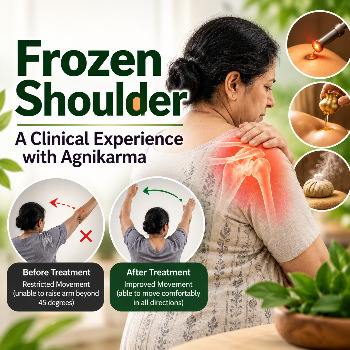
This is the clinical experience of a "58-year-old female patient with diabetes" who consulted us with bilateral frozen shoulder, with the right shoulder much more severely affected than the left.
## 7–8 Months of Pain and Restricted Shoulder Movement
The patient had been experiencing shoulder problems for approximately **7–8 months**.
Her right shoulder movement was severely restricted, while the left shoulder had partial restriction.
One of her major difficulties was raising her right arm. She was unable to comfortably raise it beyond approximately 45 degrees. Moving the arm backwards was also significantly restricted.
Because of the pain and limited movement, she was unable to perform many of her routine activities comfortably.
Looking for a Non-Surgical Treatment Option
The patient had previously consulted for conventional medical treatment, where surgery had been suggested as an option.
However, she was reluctant to undergo surgery and was advised to try physiotherapy.
Despite undergoing physiotherapy, she did not experience satisfactory relief. She therefore started looking for alternative treatment options and eventually consulted us for Ayurvedic management of frozen shoulder.
## Our Ayurvedic Treatment Approach
After clinical evaluation, we planned an individualized Ayurvedic treatment approach.
Her treatment included:
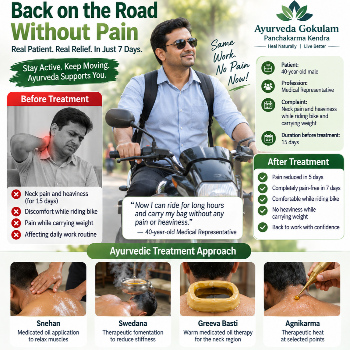
- **Snehana** – therapeutic oleation
- **Swedana** – therapeutic fomentation
- **Agnikarma** – a specialized Ayurvedic para-surgical procedure
The treatment was continued for 7 days, with her pain and shoulder movements assessed during the course.
## Improvement During 7 Days of Treatment
The patient responded well during the treatment period.
As the treatment progressed, she reported a significant reduction in shoulder pain along with improvement in mobility.
By the completion of the 7-day treatment course, she reported being free from the main pain that had been troubling her.
More importantly, the previously restricted shoulder movement improved considerably. She was able to **raise, move and rotate her arm much more comfortably in different directions** and perform routine activities with greater ease.
This was particularly encouraging considering that she had been experiencing restricted shoulder movement for approximately 7–8 months.
Agnikarma in Frozen Shoulder
Agnikarma is a specialized therapeutic procedure described in Ayurveda and is used in selected musculoskeletal and painful conditions.
In clinical practice, we do not use the same treatment protocol for every frozen shoulder patient. The treatment is selected after assessing factors such as the severity and duration of pain, degree of movement restriction, associated health conditions and the individual patient's clinical presentation.
In this case, Snehana, Swedana and Agnikarma were incorporated into the treatment plan, and the patient experienced substantial improvement in pain and shoulder mobility during the 7-day treatment period.
## Clinical Takeaway
This case demonstrates our clinical experience with Ayurvedic management of a 58-year-old woman with bilateral frozen shoulder, predominantly affecting her right shoulder.
Before treatment, she had been suffering for 7–8 months, could not comfortably raise her right arm beyond approximately 45 degrees, had difficulty moving the arm backwards and was struggling with routine activities.
Following a **7-day individualized Ayurvedic treatment involving Snehana, Swedana and Agnikarma**, she reported marked relief from pain and substantial improvement in shoulder movement, allowing her to move and rotate the arm much more comfortably.
For us, the most important outcome was not simply reduction in pain, but the improvement in movement that allowed her to return more comfortably to her routine activities.
### Important Note
This article describes an individual clinical experience and should not be interpreted as a guarantee of similar results in every frozen shoulder patient. Frozen shoulder can vary in severity and may be influenced by underlying conditions such as diabetes. Treatment should be selected after proper clinical evaluation, and outcomes can vary from person to person.


 Youtube
 Select Date