 Facebook
 Instagram
 Twitter
 Linkedin
When people talk about the future of India, they usually throw around big words. Smart cities. Industrial corridors. Sustainable development. Most of it sounds nice but feels far away from reality. Then comes Dholera Special Investment Region, and suddenly the conversation gets serious. This is not just another city on paper. This is India trying to build a city from scratch, with lessons learned from old cities that grew messy over time.
Dholera sits in Gujarat and holds the tag of India’s first planned Greenfield city. No old congestion. No patchwork development. Everything is being designed before people move in. Roads, utilities, industries, homes, transport, all planned together. That’s the big promise. And yes, it sounds ambitious. Maybe even a bit too ambitious. But that’s exactly why Dholera keeps grabbing attention from investors, businesses, and policy makers.
Let’s break it down properly, without hype, without fluff, and with a clear head.
Understanding Dholera SIR and Why It Matters
Before jumping into money, infrastructure, or future returns, we need to get the basics straight. What Dholera really is, why it exists, and why the government is putting so much weight behind it. This section sets the foundation. If this part makes sense to you, everything else will fall into place naturally.
Dholera is not being built to look fancy. It is being built to work. The idea is to create a city that can support industries, residents, technology, and sustainability at scale. Unlike traditional cities that expand randomly, Dholera is designed with a long-term horizon. Think 50 years ahead, not the next election cycle.
We’ll talk about what makes it a Special Investment Region, what Greenfield actually means here, why Gujarat became the testing ground, and how Dholera stands apart from other smart city projects in India. This is where the “why” becomes clearer than the “what”.
What Exactly Is Dholera SIR
Dholera SIR stands for Dholera Special Investment Region. That “special” part is not just for decoration. It means the area is governed under a separate legal and administrative framework designed to fast-track development. The goal is speed with structure.
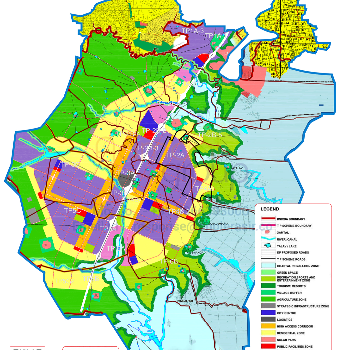
Unlike normal cities that evolve over decades, Dholera is planned as a single integrated region. Industrial zones, residential areas, commercial hubs, and green spaces are all pre-defined. No guesswork later. This allows better traffic flow, efficient utilities, and scalable growth.
Another key thing. Land pooling instead of forced acquisition. Farmers become stakeholders. That reduces resistance and speeds up execution. Smart move, honestly.
Dholera SIR also has its own development authority. That means fewer approvals, less red tape, and quicker decision-making. For businesses and investors, this is a big relief compared to dealing with multiple departments in traditional cities.
In simple terms, Dholera is not trying to fix urban problems after they happen. It’s trying to prevent them from happening in the first place.
Meaning of Greenfield City in Indian Context
Greenfield city sounds fancy, but the idea is straightforward. It means building on land where there was no city before. No old roads to widen. No illegal constructions to demolish. No tangled water lines or electric cables.
In India, most cities are brownfield. They grow organically, often chaotically. Infrastructure comes later, usually as damage control. Greenfield flips this logic. Infrastructure comes first. People and businesses follow.
For Dholera, this means wide roads from day one. Dedicated utility corridors. Separate zones for industry and living. Drainage systems designed before the first building comes up.
This approach reduces long-term costs and improves quality of life. It also makes future upgrades easier. Want to add smart traffic systems or upgrade power grids? You don’t need to dig up half the city.
Greenfield development is expensive upfront. No doubt. But over time, it pays back through efficiency, lower maintenance, and higher productivity.
Why Gujarat Was Chosen for India’s First Greenfield City
This is not random. Gujarat has a long track record of industrial development, policy stability, and infrastructure execution. Ports, highways, power availability, all are already strong here.
The state government has also shown consistency. Projects don’t stall every time leadership changes. That matters a lot for something as long-term as Dholera.
Another factor is geography. Gujarat sits strategically for trade, both domestic and international. Proximity to ports and the Delhi Mumbai Industrial Corridor gives Dholera a massive logistical advantage.
Let’s be blunt. A project like this needed a state that could actually deliver. Gujarat fit that bill better than most.
Vision Behind Developing Dholera
The vision is simple on paper and complex in execution. Create a global-scale city that can compete with industrial hubs in Asia. Generate jobs. Attract foreign investment. Reduce pressure on existing cities.
Dholera is meant to be an engine, not a satellite. An economic growth center that pulls development around it.
There’s also a demographic angle. India’s urban population is exploding. Existing cities are choking. Dholera is an attempt to offer a planned alternative before things get worse.
Is it risky? Yes. Is it necessary? Also yes.
How Dholera Is Different From Other Smart Cities
Most smart cities in India are retrofits. Add some sensors here. Upgrade a junction there. Dholera is different because smart planning is baked into its DNA.
Everything from road width to data networks is designed together. No compromises with legacy issues.
Also, scale. Dholera is massive. We’re not talking about a township. We’re talking about an entire urban ecosystem.
That’s why people either dismiss it as overambitious or believe it could be a game changer. There’s rarely a middle ground.
If cities were businesses, location would be their unfair advantage. This is where Dholera quietly flexes its muscle. A city can have the best planning in the world, but if it’s poorly connected, growth slows down fast. Dholera avoids that trap. Its location is not accidental. It’s surgical.
The planners didn’t just drop a pin on a map and hope for the best. They aligned Dholera with India’s biggest infrastructure backbone projects. Roads, rail, ports, airports, everything converges here over time. That’s why logistics companies, manufacturers, and large investors keep a close eye on this region even before full-scale habitation.
In this section, we’ll unpack where Dholera sits geographically, how it plugs into national and global trade routes, and why connectivity might end up being its strongest long-term advantage. This is less about distance on Google Maps and more about time, cost, and efficiency in the real world.
Geographic Position of Dholera
Dholera is located in the Ahmedabad district of Gujarat, roughly southwest of Ahmedabad city. It sits near the Gulf of Khambhat, giving it coastal proximity without being directly exposed to typical coastal city chaos.
This positioning does two things. First, it keeps land costs relatively lower compared to metro-adjacent zones. Second, it opens doors to maritime trade without turning the city into a congested port town.
Being close to Ahmedabad also matters. Ahmedabad is already an established economic and educational hub. Dholera benefits from that ecosystem without inheriting its traffic jams, pollution, and urban clutter.
Think of it as setting up a new factory next to a profitable business cluster, but on a clean plot with room to scale. Same talent pool. Better working conditions.
Dholera and the Delhi Mumbai Industrial Corridor
This is a big one. Dholera is a key node on the Delhi-Mumbai Industrial Corridor. DMIC is not just a road or a rail line. It’s an economic spine connecting North and West India.
Being part of DMIC means faster freight movement, reduced logistics costs, and better access to major consumption and export markets. For industries, this is a no-brainer.
Manufacturers care about one thing deeply. Time to market. DMIC shortens that timeline. Goods move faster. Inventory cycles tighten. Cash flows improve.
Dholera’s integration into this corridor makes it attractive not just for Indian companies but for global players looking to diversify supply chains away from overdependence on single regions.
Road Connectivity and Expressways
Road infrastructure is where Dholera shows its planning muscle. Wide arterial roads. Dedicated freight corridors. Smooth links to state and national highways.
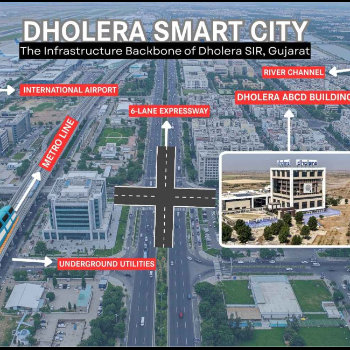
The Ahmedabad Dholera Expressway is designed to cut travel time significantly. What used to take hours will eventually take under an hour. That changes commuting patterns and business logistics completely.
For real estate, this is critical. Good roads don’t just move vehicles. They move people, capital, and confidence.
Well-planned road networks also mean fewer bottlenecks in the future. No sudden flyovers squeezed between buildings ten years later. The space is already reserved.
Metro Rail and Public Transport Plans
Private vehicles can’t carry a city forever. Dholera’s planners get that. Public transport is not an afterthought here.
Metro rail connectivity is planned to link Dholera with Ahmedabad and nearby regions. This supports daily commuters, reduces carbon footprint, and keeps traffic manageable as population grows.
Internal public transport systems are also designed early. Dedicated lanes. Smart ticketing. Integrated planning with residential and commercial zones.
When public transport is convenient, people actually use it. That’s something many Indian cities learned the hard way.
International Airport and Port Connectivity
Dholera is set to have its own international airport. That’s a serious statement of intent. Airports are not built unless long-term demand is expected.
An international airport boosts business travel, cargo movement, and global accessibility. It also increases the city’s visibility on the global map.
Add to that proximity to ports in Gujarat, and you get a powerful trade triangle. Road, air, and sea all within reach.
For exporters and multinational companies, this reduces dependency on overloaded metros and cuts operational friction.
Most Indian cities suffer from the same disease. Infrastructure comes late. Roads are dug up again and again. Wires hang everywhere. Drainage fails during one heavy rain. Dholera tries to fix this at the root. Here, infrastructure is not reacting to growth. It is anticipating it.
Urban design in Dholera is not about fancy buildings or Instagram visuals. It’s about systems working quietly in the background. Power that doesn’t trip. Water that doesn’t disappear. Roads that don’t flood. Data networks that don’t choke when demand spikes.
This section digs into how Dholera is being physically built. From underground utilities to smart systems and sustainability, this is where the city either proves its vision or fails publicly. Planning looks great on paper. Execution decides everything.
Smart Infrastructure Concept
Dholera follows a system-based infrastructure model. Instead of treating roads, power, water, and telecom as separate silos, everything is integrated.
Sensors monitor traffic, water flow, and electricity usage in real time. This allows quick fixes instead of slow damage control. If something breaks, the system knows before citizens start complaining.
Smart infrastructure also means scalability. As population increases, systems can be upgraded without tearing the city apart. That’s the hidden benefit most people overlook.
This approach reduces operational costs in the long run. Less wastage. Faster response. Better asset management. Cities that manage assets well survive longer without collapsing under their own weight.
Underground Utilities and Services
One of the most underrated features of Dholera is underground utility corridors. Power cables, water pipelines, gas lines, fiber optics, all placed below ground in dedicated ducts.
No more digging roads every six months. No more tangled wires overhead. Maintenance becomes cleaner, faster, and safer.
This also improves city aesthetics. Clean streets. Clear skylines. It sounds cosmetic, but it directly impacts livability and property value.
Underground utilities are expensive initially. But over decades, they save money, reduce accidents, and make upgrades painless. It’s a long-term mindset, not a shortcut.
Power, Water, and Waste Management Systems
Dholera’s power systems are designed for reliability and redundancy. Multiple sources. Smart grids. Load balancing. Fewer blackouts, even during peak demand.
Water management is equally serious. Separate systems for drinking water, industrial use, and recycled water. Rainwater harvesting is built into the city’s design, not added later as a token gesture.
Waste management follows segregation at source. Organic waste, recyclables, and industrial waste are handled differently. This reduces landfill pressure and improves recycling efficiency.
Cities don’t fail because of lack of money. They fail because of poor systems. Dholera is betting heavily on systems.
Digital Infrastructure and ICT Integration
A modern city runs on data. Dholera is being built with a strong ICT backbone from day one.
High-speed fiber networks support businesses, government services, and residents. Smart governance platforms allow citizens to access services online instead of standing in queues.
Traffic signals adapt dynamically. Surveillance improves safety. Utility usage is monitored centrally.
This is not about spying or control. It’s about efficiency. When data flows properly, decisions improve automatically.
Sustainable Urban Planning Approach
Sustainability in Dholera is not a buzzword slapped on brochures. It’s embedded in zoning, transport planning, and building norms.
Mixed-use development reduces travel distances. Green buffers improve air quality. Walkable zones encourage healthier lifestyles.
Buildings are encouraged to follow energy-efficient standards. Solar integration is easier when planned early instead of retrofitted later.
The idea is simple. A city that respects resources survives longer. One that abuses them collapses under its own success.
Cities don’t grow on good intentions. They grow on jobs, businesses, and cash flow. This is where Dholera is really placing its bet. Infrastructure is the base, but economics is the engine. Without real economic activity, even the best-planned city becomes a ghost town. The planners know this, and that’s why Dholera’s economic design is aggressive, focused, and very deliberate.
The idea is not to create one type of economy. Not just factories. Not just IT parks. Dholera is being shaped as a multi-sector growth zone. Manufacturing, MSMEs, technology, logistics, and services are all expected to coexist. This diversification matters because it reduces risk. If one sector slows down, others keep the city alive.
In this section, we’ll look at how Dholera plans to generate economic gravity. Where the jobs will come from, why companies would actually move here, and how this translates into long-term stability rather than short-lived hype.
Industrial Development Zones
Dholera has clearly demarcated industrial zones, and this clarity itself is a big advantage. Industries know exactly where they belong. Heavy manufacturing stays away from residential areas. Logistics zones are placed close to transport corridors. No random mixing.
These zones are designed to support large-scale manufacturing like automobiles, engineering goods, electronics, and renewable energy equipment. Land parcels are large, infrastructure-ready, and legally clear. That last part matters more than people admit.
Industries hate uncertainty. Delayed approvals, unclear titles, shifting rules. Dholera’s industrial framework tries to remove those friction points upfront.
Another factor is cluster-based development. When similar industries sit close together, supply chains tighten. Costs drop. Innovation improves. This is how industrial ecosystems actually work in the real world.
Manufacturing and MSME Opportunities
Big industries get headlines, but MSMEs do the heavy lifting. Dholera has space carved out specifically for small and medium enterprises.
This creates a layered economy. Large manufacturers act as anchors. MSMEs become suppliers, service providers, and innovators around them. Jobs multiply faster this way.
Lower entry barriers, shared infrastructure, and proximity to large buyers make life easier for MSMEs. Instead of struggling alone, they plug into a system.
For entrepreneurs, this is attractive. You don’t need to build everything from scratch. The ecosystem already exists, or is being built intentionally.
IT, Fintech, and Innovation Hubs
Dholera is not positioning itself as just another industrial town. Technology and innovation are part of the plan.
Dedicated zones for IT, fintech, and research-based companies are planned. High-speed connectivity, modern office spaces, and smart governance systems support this push.
Will Dholera compete with Bengaluru or Hyderabad overnight? No. And it doesn’t need to. The goal is to attract companies looking for lower costs, better infrastructure, and long-term scalability.
As remote work and distributed teams become more normal, geography matters less. Quality of infrastructure matters more. That’s where Dholera wants to play.
Employment Generation Potential
Jobs are the real KPI of any city project. Dholera is expected to generate employment across skill levels. Factory workers, engineers, technicians, managers, IT professionals, logistics staff, service workers.
This mix is important. Cities dominated by only high-end jobs become expensive and exclusionary. Cities with only low-skill jobs struggle with income growth. Balance keeps things stable.
As employment grows, secondary economies follow. Housing, retail, education, healthcare, entertainment. This is how a city actually comes alive.
Role of Foreign Direct Investment
Foreign investors look for three things. Policy stability. Infrastructure reliability. Exit clarity. Dholera checks many of these boxes.
Being part of national industrial strategies and backed by strong state support makes it easier to attract FDI. Global companies don’t just bring money. They bring technology, processes, and global standards.
This raises the overall quality bar for the ecosystem. Local companies learn faster. Workers gain global exposure.
FDI is not magic, but when aligned properly, it accelerates growth in ways domestic capital alone often can’t.
Real estate is where most people first hear about Dholera. Not because they love city planning, but because land is emotional in India. It feels tangible. You can see it, touch it, and imagine future value. Dholera’s real estate story sits at the intersection of long-term vision and short-term speculation. Understanding the difference is crucial.
This is not a quick flip market. Anyone selling it that way is either uninformed or dishonest. Dholera is a patience game. The upside comes from infrastructure maturity, job creation, and population movement. Not from overnight announcements.
In this section, we’ll talk about how residential and commercial real estate is shaping up, how land values are expected to behave, and what kind of investor profile actually fits Dholera. This is where expectations need to be realistic.
Residential Development in Dholera
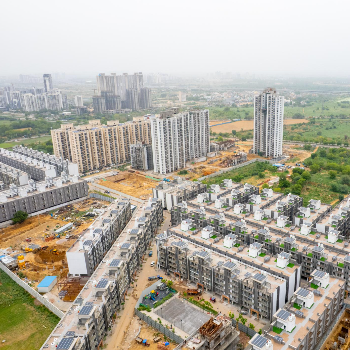
Residential planning in Dholera is structured around livability, not just density. Housing zones are placed close to employment centers but buffered from heavy industrial activity.
Different housing formats are planned. Affordable housing for workers. Mid-income housing for professionals. Premium residential zones for senior management and entrepreneurs.
The idea is to avoid the common Indian problem where workers live far away from workplaces, wasting hours daily in transit. Shorter commutes improve quality of life and productivity.
However, residential demand will grow in phases. Early buyers are betting on future occupation, not immediate rental yields. That’s an important distinction many people miss.
Commercial and Mixed Use Projects
Commercial real estate in Dholera is closely tied to economic activity. Offices, retail spaces, and mixed-use developments are planned near transport hubs and business districts.
Unlike traditional cities where commercial areas grow organically and chaotically, Dholera aims for structured clustering. This improves footfall management, parking, and public transport access.
Mixed-use projects combine offices, retail, and housing in one ecosystem. These tend to perform better over time because they reduce dependency on a single use-case.
As businesses move in, demand for quality commercial space will rise. Timing matters here more than location within the city, at least in the early years.
Land Appreciation Trends
Land prices in Dholera have already seen multiple phases of appreciation. But growth has not been linear. It moves in jumps, usually triggered by infrastructure milestones.
This is typical for planned cities. Value stays flat during construction phases, then jumps when usability improves.
Investors who understand this cycle stay calm during quiet periods. Those expecting monthly price jumps get frustrated and exit early.
Long-term appreciation depends on actual execution. Roads, utilities, jobs, and population. Announcements alone don’t hold value forever.
Why Investors Are Focusing on Dholera
Investors are drawn to asymmetry. Low current prices. High future potential. Dholera offers that, with risk.
The appeal lies in entry cost. Compared to saturated markets, Dholera still offers relatively affordable land parcels.
Another factor is policy backing. Government-led development reduces certain risks, though it never eliminates them fully.
Smart investors treat Dholera as part of a diversified portfolio, not a single all-in bet.
Long Term vs Short Term Investment View
Short-term investors usually struggle in Dholera. Liquidity can be limited. Sentiment fluctuates. News cycles distort reality.
Long-term investors, on the other hand, align better with the city’s development timeline. They allow infrastructure and economics to do the heavy lifting.
If you’re comfortable waiting, Dholera can make sense. If you need quick exits, it’s probably not the right playground.
Big cities don’t run on concrete alone. They run on rules, policies, and how smoothly decisions get made. This is where many Indian projects stumble. Too many departments. Too many approvals. Too much delay. Dholera’s success depends heavily on whether governance stays sharp and predictable over decades, not just during launch years.
Dholera benefits from unusually strong government backing. Both central and state governments see it as a showcase project. That attention matters. It speeds up clearances, improves coordination, and keeps funding pipelines active.
In this section, we’ll break down how policy support works in Dholera, what makes its governance structure different, and why ease of doing business is a silent but powerful growth driver here.
Central Government Role
The central government’s involvement gives Dholera national-level importance. It’s not treated as a local experiment but as part of India’s long-term industrial and urban strategy.
Being aligned with national infrastructure missions ensures funding continuity and policy consistency. That reduces the risk of sudden reversals.
Central support also helps attract foreign investors. Global companies feel more comfortable when projects are not dependent on a single local authority.
This top-down alignment creates confidence. And confidence is currency in large-scale development.
Gujarat State Government Initiatives
The Government of Gujarat plays the most active role in Dholera’s execution. Land policies, infrastructure funding, local governance, and investor facilitation all sit largely at the state level.
Gujarat’s administrative culture focuses heavily on execution. Deadlines matter. Reviews happen. Bottlenecks get flagged early.
State-backed agencies manage Dholera with a corporate-style approach rather than traditional municipal bureaucracy. That difference shows in project monitoring and accountability.
This doesn’t mean everything moves perfectly. But it does mean delays are addressed, not ignored.
Single Window Clearance System
One of Dholera’s strongest selling points is its single window clearance mechanism. Instead of running between departments, investors submit applications through a unified system.
This reduces approval timelines and improves transparency. You know where your file stands. You know what’s pending.
For businesses, time lost in approvals is money burned. Single window systems directly improve project viability.
It also reduces informal friction. When processes are digital and trackable, uncertainty drops.
Ease of Doing Business
Ease of doing business is not about slogans. It’s about how fast you can start operations after committing capital.
Dholera aims to simplify land allotment, construction approvals, utility connections, and operational licenses. Pre-approved zones mean fewer surprises later.
This structured approach is especially useful for manufacturing and export-oriented units that operate on tight timelines.
When businesses can plan accurately, they invest more confidently.
Incentives for Industries and Investors
Financial and non-financial incentives play a supporting role in Dholera’s growth. Tax benefits, subsidized land rates, infrastructure support, and policy incentives help reduce initial costs.
More importantly, clarity around incentives matters. Temporary schemes confuse investors. Stable, long-term incentives build trust.
Dholera’s framework tries to balance incentives with sustainability. The goal is not to attract speculative capital but long-term operators.
That distinction will decide the quality of growth the city achieves.
Sustainability is usually the first word in a brochure and the first thing forgotten during execution. Dholera is trying hard not to make that mistake. The planners know one harsh truth. A city that ignores the environment eventually pays for it in floods, heatwaves, water shortages, and public health crises. Fixing those later costs far more than planning smart at the start.
Dholera’s sustainability approach is practical, not preachy. It’s less about slogans and more about systems that quietly reduce stress on resources. Energy, water, land, and air quality are treated as assets, not infinite freebies. This mindset is what separates long-living cities from short-lived urban experiments.
This section looks at how Dholera plans to stay livable decades from now, not just impressive in launch presentations.
Renewable Energy Focus
Dholera is positioned as a major renewable energy hub, especially for solar power. Large-scale solar parks are planned in and around the region, designed to supply clean energy to industries and residential zones.
This reduces dependence on fossil fuels and improves energy security. For industries, stable and predictable power supply matters more than cheap tariffs alone.
Renewable integration also supports India’s broader climate commitments. But beyond policy, it makes economic sense. Solar power costs have dropped sharply, and long-term contracts reduce volatility.
Clean energy is no longer charity. It’s smart risk management.
Water Conservation Techniques
Water is where most Indian cities crack under pressure. Dholera tries to avoid that future.
Multiple water sources are planned, including surface water and treated wastewater reuse. Industrial and non-potable needs are separated from drinking water supply.
Rainwater harvesting is integrated into urban design, not added later as a checkbox. Stormwater drainage is planned to prevent flooding during heavy rainfall events.
Using water efficiently is not optional anymore. Cities that waste water simply don’t scale.
Green Spaces and Urban Ecology
Green spaces in Dholera are not leftover patches after construction. They are planned as structural elements of the city.
Parks, green corridors, and buffer zones improve air quality and reduce urban heat. They also support mental well-being, something planners finally take seriously.
Urban ecology also helps with flood control and biodiversity preservation. Green areas absorb water and reduce surface runoff.
A city that breathes stays healthier. It’s that simple.
Climate Resilient Infrastructure
Climate resilience means preparing for extremes, not averages. Dholera’s infrastructure planning accounts for rising temperatures, heavy rainfall, and long-term environmental shifts.
Road levels, drainage capacity, building codes, and power systems are designed with safety margins. This reduces disaster-related disruptions.
Resilience is invisible when things go right. It becomes obvious only when things go wrong elsewhere.
Dholera is betting on prevention over reaction.
Low Carbon City Vision
Lower emissions come from design choices. Shorter travel distances. Better public transport. Energy-efficient buildings. Cleaner power sources.
Dholera’s layout supports these outcomes naturally. People don’t need to be forced into sustainable behavior when systems make it convenient.
The low carbon vision is not about perfection. It’s about being significantly better than traditional urban models.
That alone would be progress.
Future Outlook of Dholera SIR
4
Every mega project reaches a moment of truth. When early excitement fades and execution becomes the only thing that matters. Dholera is approaching that phase. The plans are ambitious. The groundwork is visible. Now the city must prove it can convert vision into everyday reality.
The future of Dholera will not be decided by ads or headlines. It will be decided by people moving in, businesses operating smoothly, and systems holding up under pressure. This final section looks ahead without rose-tinted glasses.
Timeline of Development Phases
Dholera is being developed in phases. This reduces risk and allows course correction. Early phases focus on core infrastructure and industrial activation.
Later phases expand residential zones, social infrastructure, and commercial ecosystems. This phased approach is realistic for a project of this scale.
Patience is built into the design. Rushing would break more than it builds.
Expected Population Growth
Population growth will be gradual, not explosive. Early residents will mostly be workers, professionals, and entrepreneurs connected to local industries.
As job density increases, families follow. Schools, hospitals, retail, and entertainment grow naturally.
Healthy cities grow in layers, not spikes.
Economic Impact on Gujarat and India
If Dholera succeeds, its impact will extend far beyond Gujarat. It could become a blueprint for future Greenfield cities in India.
Manufacturing capacity, export competitiveness, and employment generation could see a meaningful boost.
Success here would validate long-term planning over short-term fixes.
Challenges and Ground Realities
Let’s be honest. Risks exist. Delays happen. Market cycles change. Investor patience wears thin.
Execution quality, governance continuity, and demand generation are the real tests ahead.
Acknowledging challenges doesn’t weaken the project. Ignoring them does.
Is Dholera the City of the Future
Dholera may not become a perfect city. No city does. But it represents a serious attempt to rethink how Indian cities are built.
If it achieves even 70 percent of its goals, it will still outperform most urban developments.
The future rarely arrives exactly as planned. But sometimes, planning well gives it a fighting chance.



 Website
 Youtube
 Select Date