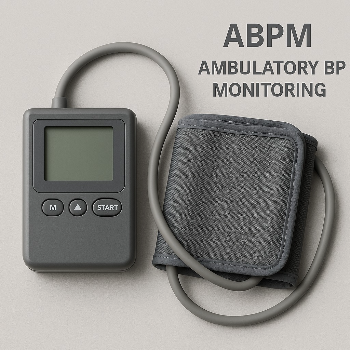
Ambulatory Blood Pressure Monitoring (ABPM) is a non-invasive method used to measure blood pressure (BP) continuously over a 24-hour period while a person goes about their normal daily activities. It involves wearing a small, portable device that automatically takes blood pressure readings at regular intervals throughout the day and night.
ABPM provides a more accurate and comprehensive assessment of a person's blood pressure compared to standard office readings. This is because it captures BP variations during different activities, including sleep and exercise, offering valuable insights into a patient's overall cardiovascular health. It is particularly helpful in diagnosing conditions like white coat hypertension (where blood pressure is elevated only in a medical setting) or masked hypertension (where BP is normal in a doctor's office but elevated at other times).
The procedure is simple and typically requires the patient to wear a cuff on their upper arm, which is attached to the monitoring device. The device inflates the cuff periodically to measure BP and records the data. After 24 hours, the device is removed, and the data is analyzed by a healthcare professional.
ABPM can help healthcare providers make more informed decisions about managing hypertension, adjust medications, and monitor the effectiveness of treatment. This method is especially useful for identifying patients who may need more personalized care based on their daily blood pressure patterns.
Key Benefits of ABPM:
- Accurate representation of blood pressure throughout the day and night.
- Helps diagnose hidden hypertension.
- Provides data that can guide treatment adjustments.
- Non-invasive and generally well-tolerated by patients.
- Useful for monitoring patients with suspected or diagnosed hypertension.
ABPM is a valuable tool for managing hypertension and improving patient care by offering a more complete picture of an individual’s cardiovascular health.
 Go to homepage