Facebook
 Instagram
 Twitter
 Linkedin


Contact Us
The Heart & Brain Clinic, Flat no. 103, 3rd Floor, Chamanlal Complex, Above Bank of Maharashtra, Sinhgad Road, Pune
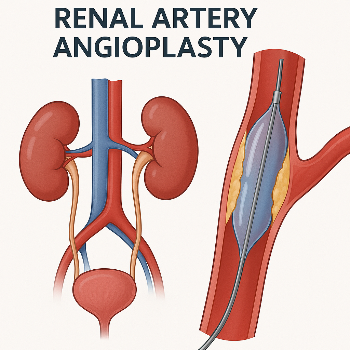
Renal Artery Angioplasty is a minimally invasive procedure used to open narrowed or blocked arteries that supply blood to the kidneys. This condition, known as renal artery stenosis, can lead to uncontrolled high blood pressure and kidney dysfunction if left untreated. The procedure helps restore proper blood flow to the kidneys, improving kidney function and helping control blood pressure more effectively.
How the Procedure is Done
The procedure is usually performed in a catheterization lab under local anesthesia and mild sedation. A thin, flexible tube called a catheter is inserted through a small incision, often in the groin or wrist, and carefully guided through the blood vessels to the renal artery using X-ray imaging. Once the catheter reaches the narrowed section of the artery, a small balloon at the tip is inflated to widen the artery. In many cases, a stent (a tiny metal mesh tube) is placed to keep the artery open permanently.
Why It Is Done
Renal artery angioplasty is recommended in patients with:
Resistant hypertension (blood pressure that does not respond to medication)
Decreased kidney function due to poor blood supply
Flash pulmonary edema (sudden fluid buildup in the lungs)
Progressive narrowing seen in imaging studies
Benefits of Renal Angioplasty
Improved kidney function
Better control of blood pressure
Reduced need for blood pressure medications
Minimally invasive with quicker recovery time compared to open surgery
Recovery and Aftercare
Most patients are discharged the same day or after an overnight stay. You may resume normal activities in a few days, but heavy lifting should be avoided for about a week. Follow-up imaging and regular monitoring of kidney function and blood pressure are important to ensure the success of the treatment.
 Select Date Select time