In the bustling city of Mumbai, where skyscrapers touch the clouds and the pace of life is ever-accelerating, Anjali found herself feeling increasingly disconnected from her roots. Born into a family with a rich history tracing back to a small village in Odisha, Anjali always cherished the stories her grandmother told of their tribal heritage. Yet, amid the concrete jungle, those tales seemed like whispers from a distant world.
Anjali's longing for connection with her ancestry was not just an emotional void; it was a profound need to express her identity, an identity deeply entwined with the vibrant culture of her forebearers. Her quest led her to discover Dokra jewelry, a timeless expression of tribal artistry that bridges the gap between tradition and modernity.
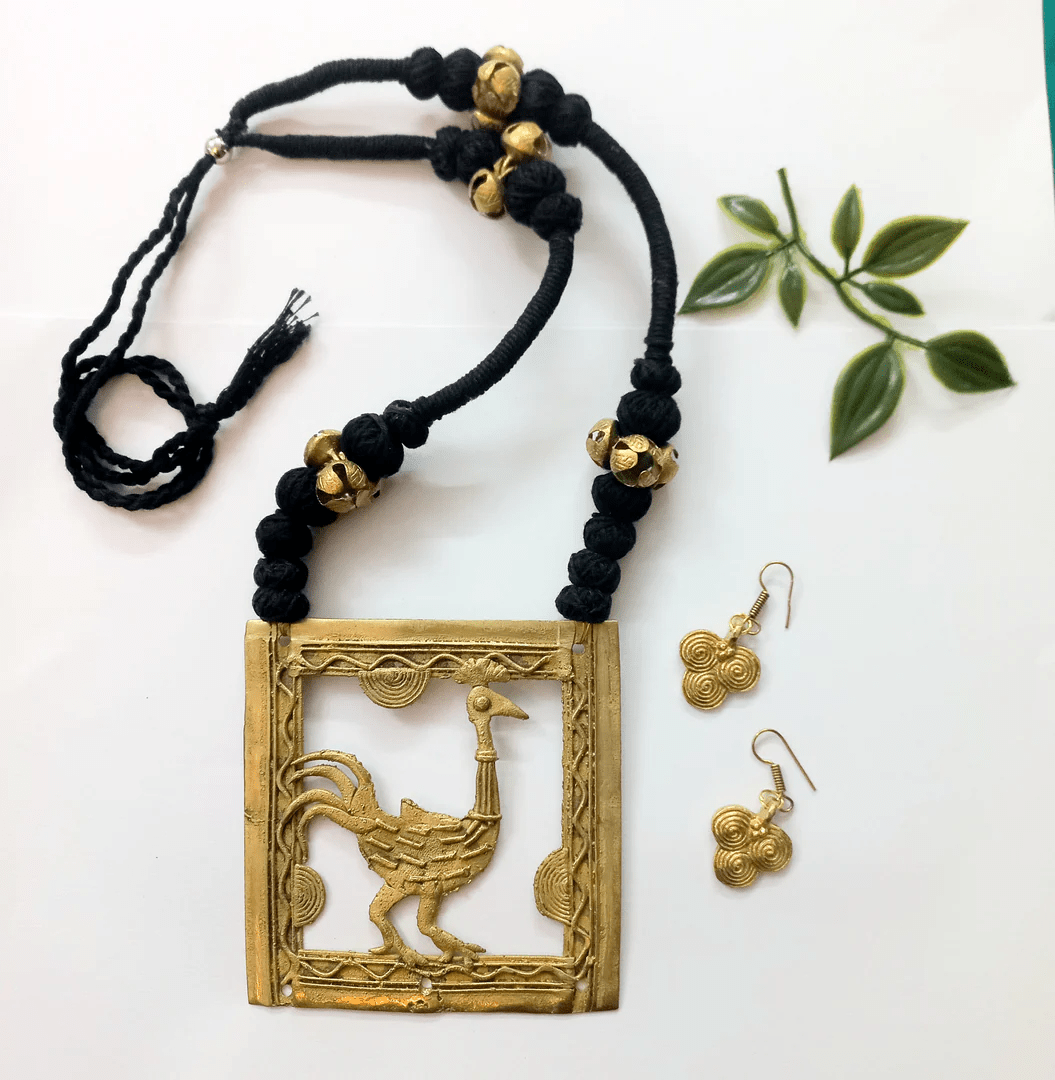
Dokra jewelry, crafted using an ancient metal casting technique over 4,000 years old, originates from the tribal regions of Odisha, West Bengal, and Chhattisgarh. Each piece is a testament to the skill and creativity of the artisans who have passed down their craft through generations, preserving stories and symbols of their heritage. The intricate designs, often depicting motifs from nature and mythology, are more than just ornamental; they are vessels of cultural narrative.
For Anjali, wearing Dokra jewelry became a way to carry her heritage with her, to wear her history like a badge of honor. Each necklace and bangle she adorned herself with was a reminder of the stories her grandmother shared, stories of resilience, beauty, and the enduring spirit of her people.
But Anjali is not alone in her journey. Many urban Indians, like her, are grappling with the challenge of maintaining a connection to their cultural roots in a rapidly modernizing world. The problem is both emotional and practical How does one honor their past while living in the present? How can one express their unique identity in a world that often values uniformity?
This is where Dokra jewelry shines. It offers a solution that is both tangible and symbolic. By integrating traditional artistry into contemporary fashion, Dokra provides individuals like Anjali with a means of expressing their identity that is both authentic and stylish. It allows them to stand out in a world of mass-produced accessories, making a statement that is personal and profound.
Take, for example, the case of Rajesh, a corporate professional in Delhi who frequently travels for work. Despite his success, Rajesh often felt a void, a sense of alienation from his cultural roots. When he discovered Dokra jewelry, he began to incorporate it into his wardrobe, not just as an accessory, but as a conversation starter. Colleagues and clients alike were fascinated by the unique designs, providing Rajesh with an opportunity to share the stories of his heritage, fostering connections that transcended business.
Dokra jewelry, with its blend of tradition and modernity, serves as a bridge across time, connecting the past with the present. For people like Anjali and Rajesh, it is more than just adornment; it is a means of storytelling, a way to keep their culture alive in a rapidly changing world.
In the end, the allure of Dokra jewelry lies in its ability to offer a personal connection to one's roots while allowing for individual expression. It solves a profound problem faced by many urban Indians the desire to honor and express their unique cultural identity in a modern context.
So, the next time you find yourself yearning for a piece of your past, consider Dokra jewelry. Let it be a reminder of where you come from and a celebration of who you are. Like Anjali and Rajesh, you too can wear your heritage with pride, creating a legacy of tradition and modernity that is truly timeless.
Visit Vyaparify Site: https://id.vyaparify.com/ekanibymonashstudio

 Go To Homepage