 Facebook
 Instagram
 Twitter
 Linkedin
In the bustling lanes of Ludhiana, where textile factories breathe life into the city, Ramesh Patel was facing a challenge that was all too familiar to many garment manufacturers. His small but ambitious company, Patel Fabrics, was struggling to meet the increasing demands of high-quality, mass-produced garments. The traditional sewing machines they used, while reliable in the past, were becoming a bottleneck, limiting their ability to scale and compete in a rapidly evolving market.
The crux of Ramesh’s problem wasn't just practical; it was deeply emotional. As a second-generation business owner, he felt the weight of legacy on his shoulders. His father had started the company with a singular sewing machine, and over the years, it had grown to employ over fifty skilled workers. Yet, despite the growth, Ramesh knew that without innovation, they were at risk of losing their competitive edge and, ultimately, the livelihood of his employees.
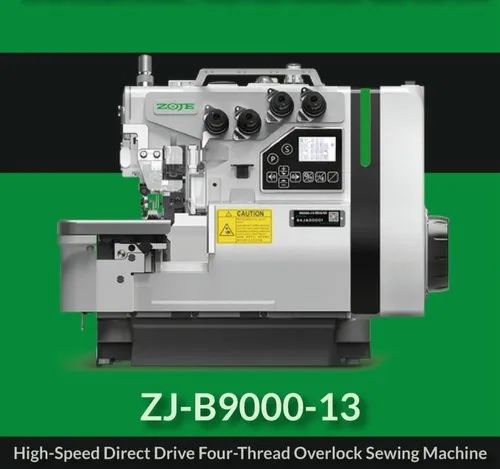
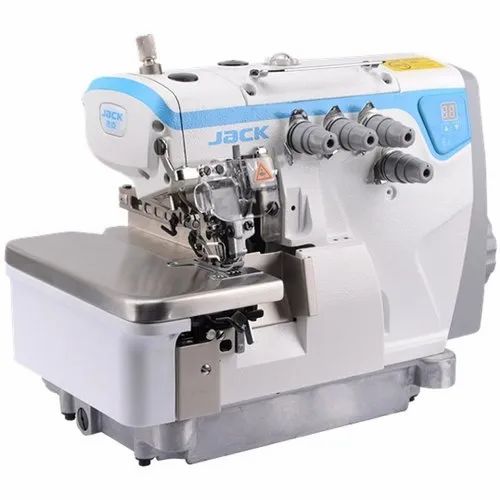
Enter the industrial garment sewing machine—an innovation that promised to solve Patel Fabrics' most pressing issues. These machines are not just about sewing faster; they represent a paradigm shift in how garments can be produced. With features like automated threading, programmable patterns, and precision engineering, they significantly enhance productivity and product quality, two critical factors for any garment manufacturer looking to scale operations.
Industrial garment sewing machines can be the differentiator for businesses like Patel Fabrics. These machines offer the ability to produce large volumes of garments with consistent quality, a feat that's impossible with traditional machines. For Ramesh, this meant he could finally meet the demands of bigger clients without compromising on quality—a win-win for the business and his legacy.
Consider the story of another entrepreneur, Priya Sharma, who owns a mid-sized garment export business in Tirupur. Priya had always been passionate about crafting high-quality garments for her clients abroad. However, as demand grew, the limitations of her existing machinery became apparent. The manual machines were slow, prone to errors, and required significant downtime for maintenance. This not only affected her production schedule but also her relationship with clients who expected timely deliveries.
After researching her options, Priya decided to invest in a fleet of industrial garment sewing machines. The transformation was almost immediate. The precision and speed of these machines allowed her to increase her output threefold, while reducing waste and errors. Her workforce, initially apprehensive about the change, quickly adapted and appreciated the reduced physical strain and increased efficiency. Today, Priya’s business is thriving, with a growing list of international clients impressed by her company’s ability to deliver high-quality garments on time, every time.
For Ramesh and Priya, the decision to upgrade to industrial garment sewing machines was not just a practical one; it was a strategic business move that addressed both their emotional and operational challenges. It empowered them to embrace growth, safeguard their employees' futures, and continue to build on their family legacies.
If you're a garment manufacturer grappling with similar challenges, it's time to consider the transformative power of industrial garment sewing machines. These machines are not merely tools; they are gateways to innovation, efficiency, and success in an industry where precision and speed are paramount.
The journey of Ramesh and Priya illustrates that embracing new technology is not just about keeping up with the competition. It's about leading the charge and setting new benchmarks in quality and efficiency. So, whether you're in Ludhiana, Tirupur, or any other textile hub in India, the solution to your production woes might just be a machine away.
In the end, the legacy of a business is not just in its history, but in its ability to adapt and thrive in changing times. For garment manufacturers, the industrial garment sewing machine is a tool that can help stitch together the fabric of future success.
By weaving these narratives, we shed light on the transformative impact of industrial garment sewing machines on Indian garment manufacturers, solving both practical and emotional challenges while paving the way for sustained growth.
Visit Vyaparify Site: https://id.vyaparify.com/galaxy-international
Location: https://g.co/kgs/TYnvT1R
.jpeg)
Contact Us
Sanganer , Jaipur


 Youtube
 Select Date