Phone

Download

social share

Share

Save

Save

Transforming Learning: How Tablets Are Revolutionizing Education in India

Share it on:

Contact Us

Transforming Learning: How Tablets Are Revolutionizing Education in India

In the bustling city of Mumbai, where the hum of rickshaws and street vendors fills the air, lives a bright-eyed girl named Meena. Meena is a 15-year-old student with a thirst for knowledge that seems insatiable. However, like many students in India, Meena faces a major obstacle limited access to quality educational resources. For Meena and countless others, the solution to this problem lies in the palm of their hands—tablets.

The education system in India is often marked by disparities. While urban centers boast of top-notch schools with all modern facilities, rural and underserved urban areas lag behind. Here, students like Meena often struggle to access the same quality of education, constrained by outdated textbooks and limited learning materials. However, the advent of affordable tablets is changing this narrative.

Imagine Meena's world before she had a tablet. Her classroom was a small, overcrowded room with barely enough seats for all the students. The textbooks were old and worn, passed down from one batch of students to the next. The lessons were largely theoretical, with little room for interactive or practical learning. Meena's curiosity often went unquenched, as her teachers simply didn't have the resources to fuel her inquisitive nature.

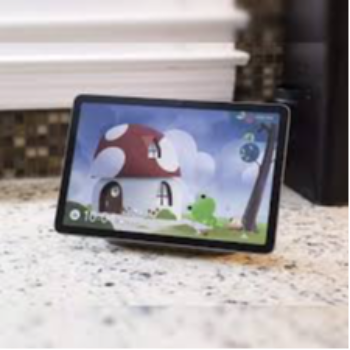
Enter the world of tablets. These sleek devices, once considered a luxury, are now within reach for many Indian families thanks to affordable options. For Meena, receiving a tablet was like unlocking a treasure trove of knowledge. Suddenly, she had access to thousands of books, videos, and learning apps—all at her fingertips. The tablet became her personal library, classroom, and laboratory, allowing her to explore subjects in depth, beyond the confines of her traditional classroom.

One of the most significant advantages of tablets is their ability to make learning interactive and engaging. Meena could now watch videos that explained complex scientific concepts with animations, participate in virtual labs, and even join online forums to discuss topics with students from around the world. This interactive approach not only made learning fun but also helped deepen her understanding of subjects.

Consider the real-life case of Akash and Priya, siblings from a small town in Rajasthan. Their father, a farmer, invested in a tablet to support their education. With the tablet, Akash improved his grades in mathematics through interactive problem-solving apps, while Priya developed a keen interest in environmental science by accessing online documentaries and e-books. The tablet bridged the educational gap for them, just as it did for Meena.

Moreover, tablets address a critical emotional need—empowerment. For students like Meena, having a tablet is not just about accessing educational content; it's about feeling empowered to take control of their learning journey. The emotional satisfaction of being able to explore and learn independently instills confidence and a sense of achievement.

The use of tablets in education also aligns with India's Digital India initiative, which aims to transform the country into a digitally empowered society. By integrating technology into education, India is taking a significant step toward ensuring that every child, regardless of their socio-economic background, has the opportunity to receive a quality education.

However, it's important to acknowledge the challenges that come with this technological shift. While tablets are becoming more accessible, internet connectivity remains a hurdle in many rural areas. Efforts are underway to improve digital infrastructure, ensuring that students like Meena can fully benefit from the digital revolution in education.

In conclusion, tablets are not just devices; they are transforming tools that are reshaping the educational landscape in India. For students like Meena, they represent a lifeline to knowledge, a bridge over the educational divide. As more families embrace this technology, the dream of an equitable education for all becomes a closer reality. For Meena, Akash, Priya, and countless others, tablets are more than gadgets—they are the key to a brighter, more informed future.

Visit Vyaparify Site: https://id.vyaparify.com/golumobileaccessories

Share it on:

Contact Us

back-to-top

Share