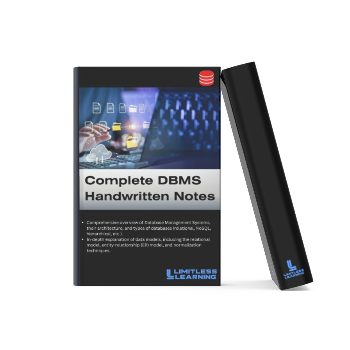
Chapter 1: Introduction to DBMS
Basic concepts of databases
Database management system architecture
Data Models
Advantages and disadvantages of using databases
Chapter 2: Entity-Relationship (ER) Model
Entities, attributes, and relationships
Entity-relationship diagrams (ERDs)
Cardinality and participation constraints
Keys in the ER model
Chapter 3: Relational Data Model
Chapter 4: Normalization
Chapter 5: Query Optimization and Execution
Query processing and parsing
Query optimization techniques
Indexing and hashing
Execution plans and cost estimation
Chapter 6: Transaction and Concurrency Control
ACID properties of transactions
Schedules and serializability
Concurrency control and techniques
Deadlocks and their prevention
Chapter 7: Crash Recovery and Backup
Recovery Techniques (undo, redo logging)
Recovery manager and buffer management
Backup and restore procedures
Chapter 8: Database Security and Authorization
Security threats and countermeasures
User authentication and authorization
Access control and privileges
Chapter 9: Distributed Databases
Chapter 10: NoSQL Databases
Overview of NoSQL databases
Key-value stores, document stores, column-family stores, graph databases
Comparison with traditional relational databases
Chapter 11: Big Data and Data Warehousing
Introduction to big data and its challenges
Data warehousing concepts
Extract, Transform, Load (ETL) processes


 Facebook
 Instagram
 Twitter
 Linkedin


 Select Date


 Website
 Youtube