
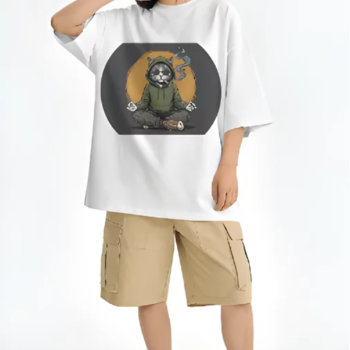
GSM stands for grams per square meter — it's how fabric weight gets measured, and it's the number that tells you more about a shirt's quality than the price tag does. Lower GSM (under 160) means a lighter, often see-through fabric that wrinkles fast and doesn't hold a print well over time. Higher GSM (200 and up) means thicker cotton that drapes better in an oversized cut and takes longer to show wear.
The Zenitsu Oversized tee in this shop runs at 240 GSM French terry, which is on the heavier end — good for layering through winter, less ideal if you're buying it purely for hot weather. Most of the standard graphic tees sit lower, which is fine for daily wear but won't hold up the same way to frequent washing.
If a print is the main reason you're buying the shirt, GSM matters more than people think. Thin fabric stretches around the print area with wear, which is part of why the same design can look sharp on a heavier tee and slightly warped on a cheaper one after a few washes. The Luffy print here holds up well for exactly this reason — the fabric underneath is doing as much work as the design itself.
GSM ranges at a glance
This isn't a strict rulebook — a 180 GSM tee in good cotton can outlast a poorly finished 220 GSM one — but it's a reasonable starting point when nothing else is listed.
How to check GSM before buying online
Not every product listing states GSM outright. When it's missing, a few things hint at it: "French terry" or "heavyweight" in the description usually means 200+; "lightweight" or "breathable summer fit" usually means under 180. Price is a weak signal on its own, but combined with fabric description it narrows things down. If a listing gives no clues at all, asking the shop directly before ordering is the more reliable option than guessing from photos.
Practical takeaway: if you're buying for the graphic, lean toward the heavier options in the shop. If it's a basic layering piece, lower GSM is fine and cheaper.