Facebook
 Instagram
 Twitter
 Linkedin
In the heart of bustling Mumbai, amidst the noise and chaos, there’s an oasis of creativity where visions take shape and dreams become reality. Meet Arjun Mehta, a seasoned architect known for his innovative designs that blend modern aesthetics with traditional Indian elements. Arjun’s journey in the architectural world has been nothing short of inspiring, but like many of his peers, he often faced a significant challenge how to effectively communicate complex designs to clients and stakeholders who may not be well-versed in architectural jargon or blueprints.
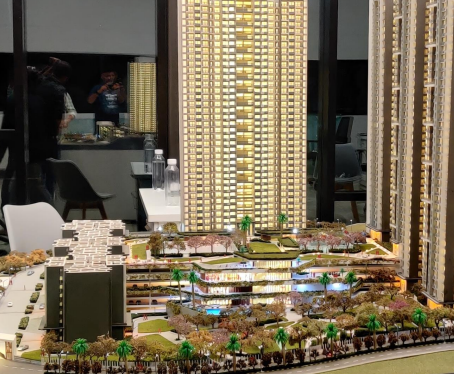
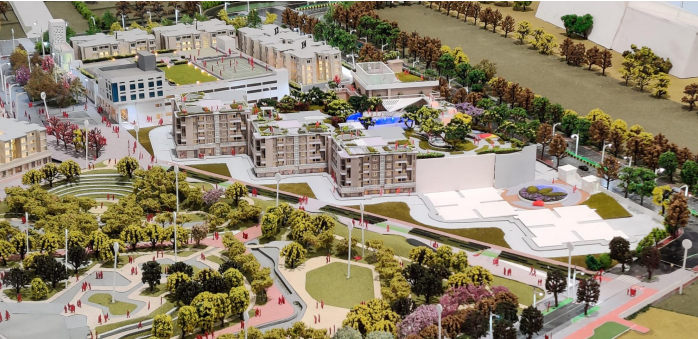
This is where precision cut section models come into play, revolutionizing how architects like Arjun convey their ideas. These models provide a tangible, three-dimensional representation of designs, allowing clients to visualize every detail with clarity and precision. For Arjun, this has been a game-changer.
To understand the impact of precision cut section models, let’s delve into a recent project Arjun undertook. He was tasked with designing a state-of-the-art cultural center in Pune, a project that required the approval of various stakeholders, including government officials, investors, and community leaders. Traditionally, Arjun would have relied on digital renderings and 2D blueprints, but he knew from past experience that these often left people with more questions than answers.
Instead, Arjun opted to use precision cut section models. As he unveiled the intricately detailed model of the cultural center, the room fell silent. The stakeholders could see the flow of the design, the interplay of light and shadow, and the thoughtful integration of cultural motifs that paid homage to the city’s rich heritage. It was as if the building had come to life before their eyes. Questions turned into nods of approval, and the project secured unanimous support.
Precision cut section models don’t just solve practical problems; they address emotional ones too. For Arjun, the ability to convey his vision with such clarity and impact instilled a sense of confidence and satisfaction. He no longer had to worry about misunderstandings or misinterpretations that could derail his projects. Instead, he could focus on what he loved most creating spaces that inspire and uplift.
Beyond architecture, these models have found applications in various fields, from engineering to education. Take the story of Priya Nair, a passionate educator in Chennai, who wanted to bring complex scientific concepts to life for her students. With precision cut section models, Priya was able to create detailed representations of biological structures and mechanical systems, making learning a tangible and engaging experience. Her students, who once struggled with abstract concepts, now eagerly anticipated her classes, their curiosity and understanding deepening with each model they explored.
In the competitive business landscape, where innovation is key, precision cut section models offer Indian innovators a distinct advantage. They provide a bridge between imagination and reality, enabling creators to showcase their ideas with unparalleled clarity and precision. Whether you’re an architect like Arjun, an educator like Priya, or an engineer developing cutting-edge technology, these models empower you to communicate your vision effectively and bring your audience on board with confidence.
As we embrace the future, the ability to visualize and communicate complex ideas will be more crucial than ever. Precision cut section models are not just tools; they are enablers of creativity and precision, helping Indian innovators transform their visions into reality, one model at a time.
So, if you find yourself facing the challenge of conveying complex ideas, consider the power of a precision cut section model. Like Arjun and Priya, you too can turn your challenges into opportunities, transforming your vision into a tangible, awe-inspiring reality that captivates and convinces.
Visit Vyaparify Site: https://id.vyaparify.com/vinayak-art-studio
Contact Us
s,no,46,khopde nagar, gujarwadi road, katraj., Katrajnagar, Katraj, Pune, Maharashtra 411046, India


 Select Date