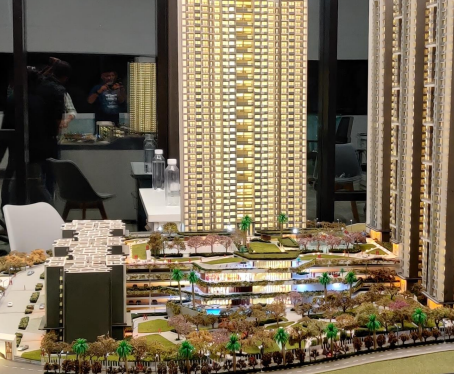
In the bustling heart of Mumbai, amidst the cacophony of car horns and vibrant street vendors, lives Rakesh Mehta, an ambitious architect with dreams as tall as the skyscrapers he designs. For Rakesh, every blueprint is a story waiting to be told, but like many in his field, he often faces a significant challenge translating intricate designs from paper to reality.
Rakesh is not alone in this struggle. Across India, architects and designers grapple with the same issue—the gap between conceptualization and execution. Enter the world of precision cut section models, a revolutionary tool that is transforming the way professionals like Rakesh bring their visions to life.
Imagine standing in a room filled with potential clients, trying to convey the grandeur of your architectural concept. Words can only do so much, and 2D blueprints often fall short of capturing the essence of your design. This is where precision cut section models become indispensable. They offer a tangible, three-dimensional representation of your ideas, allowing clients to truly visualize the final product.
For Rakesh, this was a game changer. During a recent project, he was tasked with designing an eco-friendly residential complex for a prominent developer in Pune. The pressure was immense, and the stakes were high. The developer, Priya Kapoor, needed to see beyond the lines and measurements, craving a comprehensive grasp of the design's impact.
Rakesh decided to employ precision cut section models to bridge this gap. These models allowed Priya to see exactly how the proposed solar panels would integrate with the overall structure and understand the spatial dynamics within the complex. The intricate details, from the slant of the roof to the curvature of the balconies, were all laid bare. Priya was not just impressed; she was convinced.
The power of precision cut section models lies not just in their ability to convey detail, but also in their emotional impact. For designers like Rakesh, these models do more than illustrate—they inspire confidence and trust. When clients can physically interact with a model, they're more likely to feel secure in the investment they're making.
Consider the case of Anjali Verma, an interior designer in Bengaluru known for her innovative approach to small spaces. Anjali often struggled with clients who couldn’t visualize her ideas, leading to misunderstandings and revisions. By incorporating precision cut section models into her presentations, Anjali was able to provide her clients with a clear, tactile preview of her designs. The result? Faster approvals and more satisfied clients, leading to a boom in her business.
In a country as diverse and expansive as India, where cultural nuances and regional preferences play a significant role in design, the ability to present clear, precise models is invaluable. Precision cut section models cater to this need, offering a universal language that transcends linguistic barriers and speaks directly to the heart of the design.
Beyond practicality, these models also address an emotional need. For architects and designers, their work is not just a job—it’s a passion, a legacy. Precision cut section models allow them to showcase their artistry with pride and precision, ensuring that their vision is communicated as intended.
In conclusion, the story of Rakesh, Anjali, and countless others across India highlights a pivotal truth in the world of design clarity is key. Precision cut section models provide that clarity, bridging the gap between imagination and reality. They are not just tools; they are storytellers, weaving narratives of innovation and creativity. For any architect or designer seeking to elevate their craft, these models are not just beneficial—they are essential.
As Rakesh stands on the balcony of his newly completed project in Pune, watching the sunset cast a golden glow over the city, he knows he’s not just building structures; he’s building dreams. And with the right tools, those dreams are limitless.
Visit Vyaparify Site: https://id.vyaparify.com/vinayak-art-studio

 Go To Homepage